
“The budget required to finance success at the highest level demands year-round attention.”
It was in Kevin McStay’s resignation notice to the Roscommon county board that he referenced the financial issue.
“I have to acknowledge the inordinate amount of time I spent dealing with financial and facility issues…” he continued.
Time is money, and Kevin McStay had spent too much of his on matters outside of football.
McStay had had enough and, with that, Roscommon football was catapulted straight back to square one.

Jim McGuinness famously used drive around his county to try attract sponsors for the Donegal senior football team. Kerry and Mayo have had banquets abroad to raise finance to help fund their teams.
Anybody who doesn’t think money has an impact on the success of a county’s senior football team needs their heads examined. Yes of course, money alone won’t lead to success, but when it leads to greater expertise and is combined with dedication and a massive population, it certainly makes a difference.
There are so many costs involved in running an inter-county team, the most expensive of which are things like:
- S and C coaches
- Physiotherapists
- Proper gym facilities
- Travelling expenses
- Food and drink
Some teams can’t really afford these. Remember the statement from the Offaly footballers earlier this year which mentioned that they didn’t have a Strength and Conditioning coach for the full year.
Mayo have been the only team to really challenge Dublin over the last few years. One of the main reasons they can put it up to Dublin is because they’re physically able for them. Don’t for a second think that their S and C coach Barry Solan with all of his Arsenal experience and all the facilities and camps come cheap.
Strength and conditioning carried out right and having all of the above in good order leads to percentage gains for teams in a game of fine margins.
Money matters and where counties like Roscommon and their managers like Kevin McStay have to go to serious lengths to raise it, the Dublin team and Jim Gavin wouldn’t have to know much about that struggle, not anymore anyway.
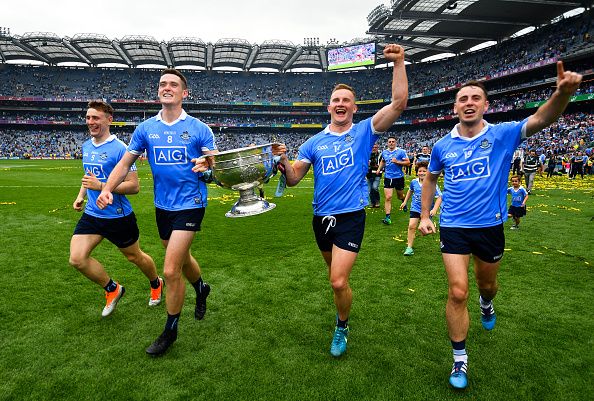
Dublin GAA becomes rich
It was back at a Special Congress meeting in 2002 when the famous strategic review took place and the GAA effectively decided to give Dublin GAA a leg-up.
This leg-up was provided to Dublin in the form of a Games Development grant. Back then it was the none-too-shabby sum of €1.5million give or take they received – its sole aim, according to the GAA, to increase participation numbers in Dublin and to improve coaching standards in the capital.
Dublin was the only county in Leinster, the only county in Ireland to receive this Games development grant. They got special treatment which, according to the GAA, was because they’re this country’s capital city and having a strong GAA presence in the capital city was one of the GAA’s main goals.
Jarlath Burns, who was chairman of the Players Committee in 2002 when the strategic review was undertaken, read out a section of that by now almost infamous report on Thursday’s GAA Hour Show.
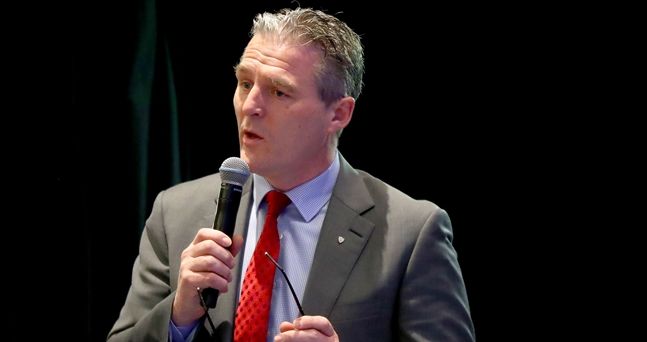
‘The last five years have seen a rapid growth in the number of people living in the Greater Dublin Area,’ it read.
‘Recent research has indicated that fewer and fewer of these children are choosing Gaelic Games as their preferred activity. The situation is further compounded by the fact that the main competitors in the sporting arena are investing significantly in marketing their games aggressively, including areas and schools where previously the GAA was the dominant entity in sporting terms,’ it continued.
That’s fair enough. It makes sense to at least try to have as much people as possible playing our national game and targeting the area with the biggest population was a logical move.
So from the next year onwards, Dublin GAA was pumped with funding, year on year, from the central body itself. Underage structures improved, the number and education of coaches grew while participation numbers increased.
The only problem was that the other counties were ignored while Dublin grew and grew.
Just got sent this by a concerned fan. It's the GAA games development split. Really hits home in this form. pic.twitter.com/nd6ScqpfsF
— Ewan MacKenna (@EwanMacKenna) September 7, 2018
Only in 2016 did the GAA begin to give anything to the other counties in Leinster, when the east Leinster project was introduced which, when compared to Dublin’s lot, is small change.
After a couple of years, the Dubs began to take over at underage level. Dublin won four minor titles between 2009 and 2014, they won four under-21 titles in the same period.
During that time-frame, their seniors won Sam in 2011 and 2013 and the sponsorship deals came rolling in, those €1 million per year from AIG kind of sponsorship deals.
It’s 2018 now and Dublin still receives over a €1 million Games Development grant off the GAA every year and they’ve won four football All-Irelands in-a-row.
The solution
Dublin have managed these finances incredibly well and their use of their own resources has been exemplary.
Their underage club structures are as good as other some county’s development squads. There are two, sometimes three games development officers in many of these clubs. There are two, sometimes three in many other counties.
A few years ago that there were more under 14s in Ballyboden than there were in the whole of Leitrim.
And no other county can come close.
This is where we are now. Participation levels in Dublin are ever increasing to the extent that they’re not far away from provincial numbers. Back in 2011, the former Dublin chairman Andy Kettle claimed in the Blue Wave report that the Dubs should be pushing for a provincial status in terms of the funding they receive.
“It doesn’t make sense that we should be considered 1/32 of the country, when we should be 1/5th,” read that report.
And it would make sense for Dublin to push for provincial status. Their aim of course, has to be to keep on getting as many youngsters and people involved in the GAA as possible.
But you can’t have it every way, and something has to give in that case. As the numbers increase, think of all the youngsters in Dublin who may be lost to the GAA because of the realisation that it’ll be incredibly difficult for them to reach the greatest honour there is in the GAA – to represent Dublin at some level.
Think of the widening gap with the other counties.
And Colm Parkinson offered the solution to it all on Thursday’s GAA Hour Show.
“If all of these Games Development officers continue on this good work, there are 90 in Dublin, 89 in the rest of Leinster,” he said.
“You add to this that Dublin’s population is expected to grow in the next 20 years. You add all of this together, Dublin will have the population of a province, they’ll get towards the playing percentage of a province, they’ll have the commercial revenue of a province, they’ve the GAA funding of a province.
“They field one team…If you’re to follow this through, the only solution to this, if everything continues as it’s going, is not for Dublin to be split into two, it’s for Dublin to be split into at least four,” he said.
You can listen to the ferocious debate between Jarlath Burns and Colm Parkinson here.